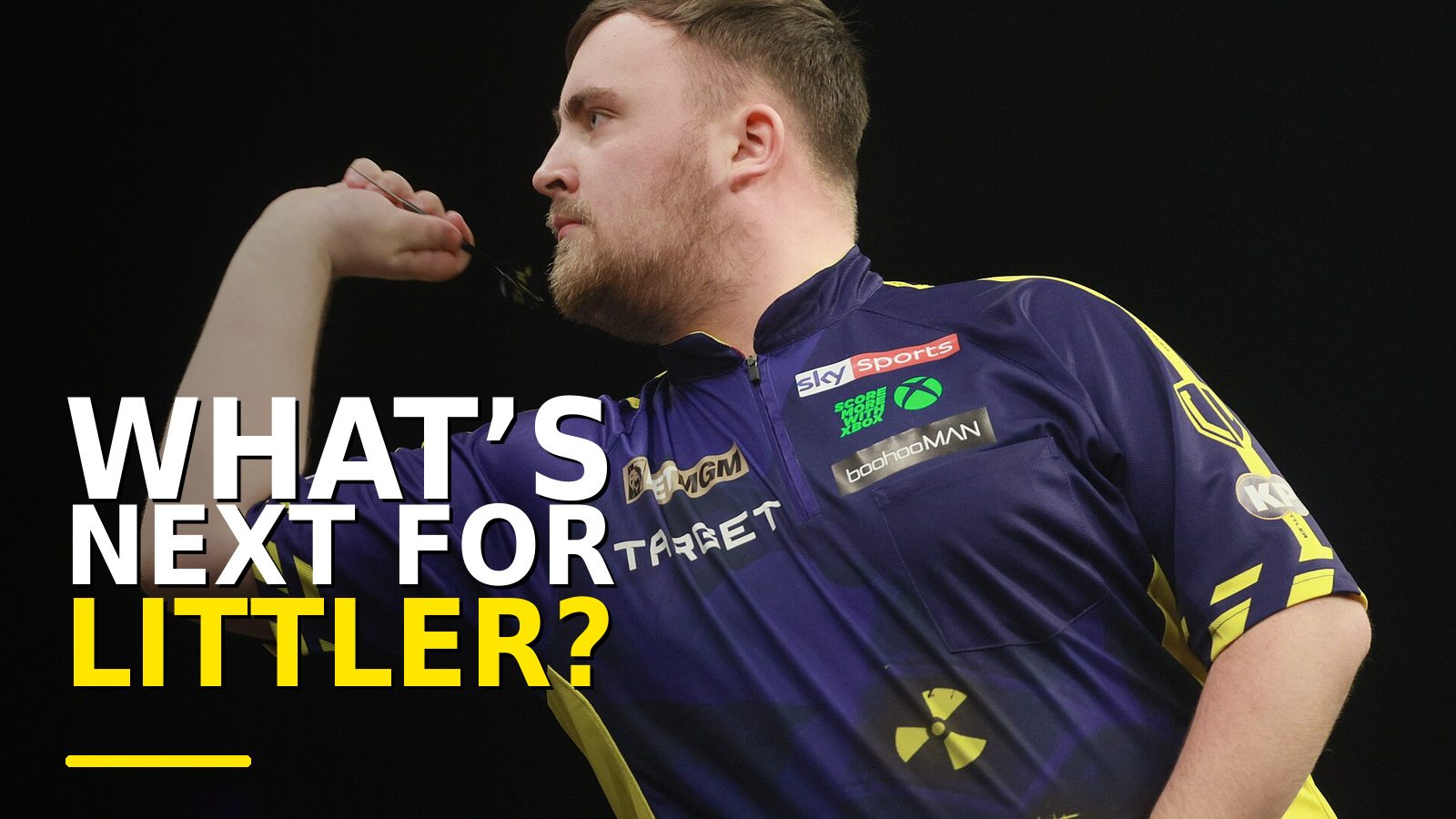

Luke Littler’s quest to complete a clean sweep of the PDC’s major televised titles in 2026 is over. It came to a crashing halt over the weekend as Littler suffered a 10-4 defeat to Jonny Clayton in the quarter-finals of the World Series of Darts Finals in Amsterdam, with double trouble proving costly against a far more clinical opponent. So what next for Luke the Nuke?
The immediate answers are clear. No more Players Championships. No Minehead for the Players Championship Finals. Instead, Littler will shift his focus to the majors he’s already qualified for — the World Grand Prix, the European Championship, the Grand Slam of Darts and the biggest of them all, the World Championship at Christmas.
Littler holds all of those titles bar the European Championship, which will surely have been circled on his calendar for some time after Gian van Veen’s breakthrough victory in last year’s event. But there’s a big question mark that was exposed in Amsterdam over the weekend. The European Championship takes place in Dortmund, Germany.
And Littler’s relationship with German crowds has become increasingly difficult. Ever since an on-stage spat with German World Cup star Ricardo Pietreczko early in his PDC career, he has drawn regular boos from hostile crowds. Littler has been outspoken about that treatment and has increasingly avoided European Tour events in Germany.
Not that he hasn’t had success there. He won night eight of this year’s Premier League in Berlin, hitting two 170 finishes in his final victory over Michael van Gerwen. Earlier in his career, he broke the record for most 180s in a European Tour event in Germany too. The question doesn’t seem to be whether Littler can play in a hostile environment; it’s how willing he is to keep putting himself in one.
Littler has already amassed a major-title haul most players never get close to. At just 19, he is the world No.1, has won millions in prize money and reportedly signed a £20 million, 10-year sponsorship deal with Target. It’s easy to see why he feels able to be selective over the events he enters. After the treatment he received in Amsterdam, he was clear that he sees little point in travelling to events where he expects to be booed and whistled while throwing.
While Littler will go into Dortmund among the leading contenders, how he handles the crowd will be one of the biggest questions surrounding his campaign to win the only major currently missing from his collection. If his struggles in Amsterdam are anything to go by, I wouldn’t bet against him having to wait another year.
But how about the rest of the majors? They’re all due to be played in England, in front of crowds where Littler will likely be the fan favourite going into each match.
The first is the World Grand Prix, a unique tournament where legs must be started on a double and shock results are fairly common. Littler has a relatively comfortable quarter, with Michael van Gerwen appearing to be the biggest potential stumbling block. But the adjacent section of the draw contains Gerwyn Price, Ross Smith, Jonny Clayton and Wessel Nijman — all capable of causing problems if they meet Littler later in the tournament. In this format, a slow start on the doubles can turn a match very quickly.
The Grand Slam of Darts provides another potential issue for the Nuke. The initial part of the tournament is a round-robin group stage, where two players in each four-player group go home. Over best-of-nine-leg matches, Littler could be vulnerable and, should he be drawn against a popular underdog, he could again find himself playing against the room as well as the opponent. Last season’s Grand Slam win was arguably one of the most dominant tournament performances the PDC has seen, and if Littler makes it through the group stage, it’s hard to look past him.
And then we get to the big one. The World Championship has belonged to Littler for the past two years, but he’s been its biggest story for the last three. This is another place where I could see him being tripped up, however. Dutch and German fans travel in huge numbers when their countrymen perform at Ally Pally and, should Littler face one of them, he could find himself in another difficult atmosphere. It happened last year when he faced Rob Cross and, while he managed to defeat Voltage, running into an in-form opponent with the crowd against him could be his undoing.
Personally, I’d still back him to win the rest of the majors. He’s just that much better than everyone else, especially in the big moments. However, the bigger question raised in recent days — including by Samuel Gill, editor of DartsNews.com — is what Littler’s relationship with crowds could mean for his long-term future in the sport.
Crowds love new things. Littler himself was the hot new prospect who fans got behind as he nearly completed the fairytale on his World Championship debut three years ago. But what happens when the next versions of Littler hit the scene? Will some of that support shift towards the likes of Mitchell Lawrie, Kaya Baysal or, in a few more years, Jack Johnson or Jayden Walker?
If so, will Littler take the same approach to British crowds as he has to hostile audiences elsewhere? He is already one of the biggest personalities in darts and, with mainstream opportunities such as Beat Luke Littler expanding his profile beyond the oche, it will be fascinating to see how he reacts if he is no longer automatically the crowd favourite.
Ultimately, I think the discussion is still hypothetical. Littler has many of the same qualities that allowed Phil Taylor to dominate the game in the 2000s, and I doubt British crowds will truly turn on him any time soon. But if his relationship with audiences continues to become a bigger part of the story, his response when the next generation starts siphoning off some of his popularity could be every bit as fascinating as what he does at the board.
Leave a Reply