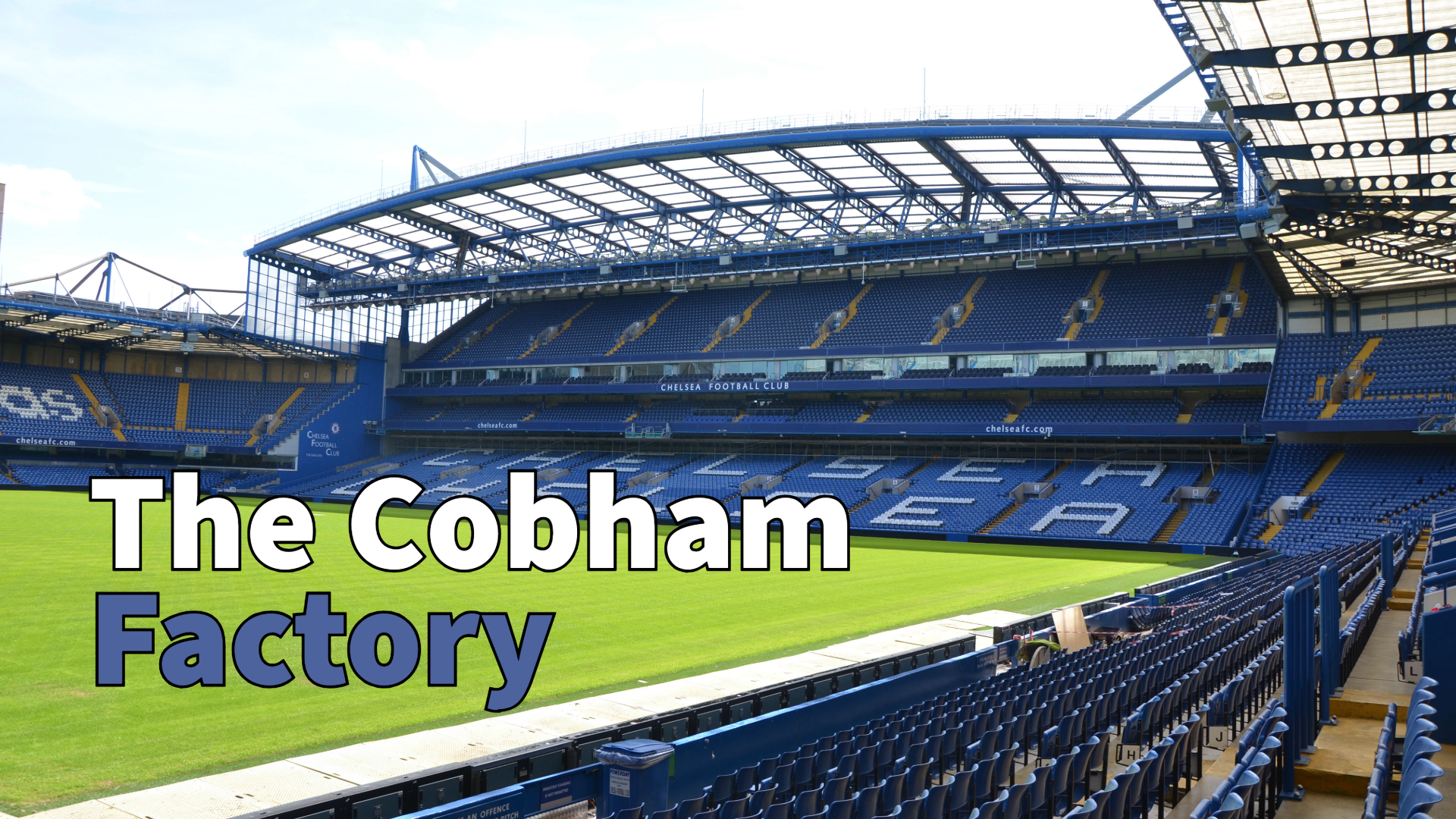

For decades, elite football clubs judged success purely by trophies in the cabinet. Modern football demands more: silverware on the pitch and financial sustainability off it. At the heart of Chelsea’s modern identity sits the Cobham Training Centre, a £20 million complex opened in Surrey in 2007 that grew into the single most profitable youth academy in world football.
Long dubbed the “Cobham Factory”, Chelsea’s youth system has consistently supplied top-level talent to European football, generated over £500 million in pure profit player sales and helped deliver domestic and European success.
The men behind Cobham
Neil Bath and Jim Fraser were central to that transformation. Across two decades together, they built an academy whose influence reached far beyond Chelsea’s first team. Bath shaped the development programme; Fraser helped establish the recruitment network and pathways that brought young players through it.

Their work produced homegrown players such as Reece James and Mason Mount, both key figures in Chelsea’s 2021 Champions League triumph. It also helped establish an academy whose graduates could build successful careers elsewhere, with their sales becoming a major financial engine for the club.
Finding the next generation
Chelsea invested heavily in scouting across London and the Home Counties, identifying players at under-eight to under-12 level. That local recruitment network brought future internationals into the system early and gave coaches years to develop their ability.
Recruitment was only the beginning. Cobham’s approach combined technical coaching with education, resilience and character development. Young players learned to operate in different positions and formations, preparing them for the demands of senior football.
The loan system
Chelsea’s extensive loan network offered another step towards the first team. Rather than spending their entire development in youth or reserve football, prospects gained experience in competitions including the Championship, Eredivisie and Bundesliga.
Those spells tested players against experienced professionals. A successful loan could put a graduate in contention at Stamford Bridge or help create an opportunity for a permanent move elsewhere.
The financial value of Cobham
Academy sales have become an important part of Chelsea’s finances. For players developed without a transfer fee, sale proceeds can largely be recognised as accounting profit, making them particularly valuable when clubs are assessed against financial rules. That accounting treatment does not mean developing a player costs nothing.
The departures of players such as Mount, Conor Gallagher, Marc Guéhi and Fikayo Tomori show the scale of the academy’s contribution. Cobham’s value extends beyond the players who stay: it also helps fund the team they leave behind.
A record of youth success
Before making their names in senior football, successive Chelsea generations collected domestic and European honours. The run of five consecutive FA Youth Cups remains a defining achievement.
| Competition | Highlights |
|---|---|
| FA Youth Cup | Nine titles, including five consecutive wins from 2014 to 2018, matching Manchester United’s 1950s run. |
| UEFA Youth League | Winners in 2015 and 2016; four final appearances. |
| Under-21 Premier League / Premier League 2 | Champions in 2014 and 2020; finished top of the 2025/26 league phase. |
The players who came through Cobham
Chelsea’s academy story stretches back beyond the modern training centre, through names such as Jimmy Greaves and John Terry. The Cobham era has added another wave of talent to that history.
Reece James
James joined Chelsea at six and developed into a full-back who combines physical power, defensive intelligence and dangerous delivery. He was essential to the 2021 Champions League victory and went on to become club captain.
Mason Mount
Another arrival at six, Mount became a key creator and presser in Chelsea’s midfield. He supplied the assist for the winning goal in the 2021 Champions League final and won consecutive club Player of the Year awards before moving to Manchester United in a deal worth up to £60 million.
Jamal Musiala
Musiala spent eight years in Chelsea’s youth system between 2011 and 2019 before joining Bayern Munich. His close control and ability to carry the ball through crowded spaces helped him develop into one of Germany’s outstanding attacking players.
Levi Colwill
Colwill joined at nine and progressed as a composed, left-footed centre-back with the passing range to start attacks from deep. His development took him into Chelsea’s first team and the England senior squad.
Marc Guéhi
Guéhi arrived at seven and captained Chelsea youth teams during a successful period for the academy. His move to Crystal Palace gave him the platform to establish himself in the Premier League and become a starting centre-back for England.
Tammy Abraham
A prolific scorer throughout the youth ranks, Abraham joined Chelsea at seven and finished as the club’s leading scorer in 2019/20. He was part of the Champions League-winning squad before moving to Roma, where he won the Europa Conference League.
Nathan Aké
Aké joined from Feyenoord at 16, helped Chelsea win the FA Youth Cup and gained senior experience before moving to Bournemouth. His versatility and composure later earned him a £41 million move to Manchester City, where he played an important part in their historic treble.
Andreas Christensen
Christensen arrived from Brøndby at 16 and developed further during a loan spell at Borussia Mönchengladbach. He came off the bench in Chelsea’s 2021 Champions League final victory before later joining Barcelona on a free transfer and winning La Liga.
Lewis Hall
Hall joined at eight and broke into Chelsea’s first team as a teenager, winning the club’s Academy Player of the Year award in 2023. Newcastle then signed the left-back and midfielder in a deal worth up to £30 million.
The next Cobham stars to watch
Josh Acheampong
Comfortable at right-back or centre-back, Acheampong combines recovery pace with composure under pressure. His versatility makes him an intriguing prospect as Chelsea look to bring another generation of defenders through the academy.
Shim Mheuka
Mheuka combines finishing ability with hold-up play and has already made an impression in senior football. He made his Chelsea debut in December 2024, became one of the club’s youngest European starters and subsequently earned the Premier League 2 Player of the Season award for 2025/26. He is continuing his development on loan at Celtic.
Reggie Walsh
Walsh is a midfielder whose close control and composure help him receive the ball under pressure. He became Chelsea’s youngest European starter at 16 years and 200 days and is gaining senior experience on loan at Wigan Athletic.
Ibrahim Rabbaj
Nicknamed the “Cobham Messi”, Rabbaj is a left-footed attacking midfielder and winger with quick acceleration and close control. His ability to beat opponents one-on-one, particularly from the right, makes him another young player worth following.
Chelsea’s academy has built its reputation through a combination of recruitment, coaching, facilities and opportunities to experience senior football. Its graduates have helped Chelsea win major honours while also becoming important players for clubs across Europe.
Musiala, Christensen, Gallagher, Ruben Loftus-Cheek and Tomori illustrate that reach, alongside Premier League names such as Declan Rice, Dominic Solanke and Mount. Their paths have differed, but time in Chelsea’s youth system connects them.
Whether supplying Chelsea’s first team or creating opportunities elsewhere, Cobham remains one of football’s most productive academies. The next generation now has the chance to add to that story.
Leave a Reply