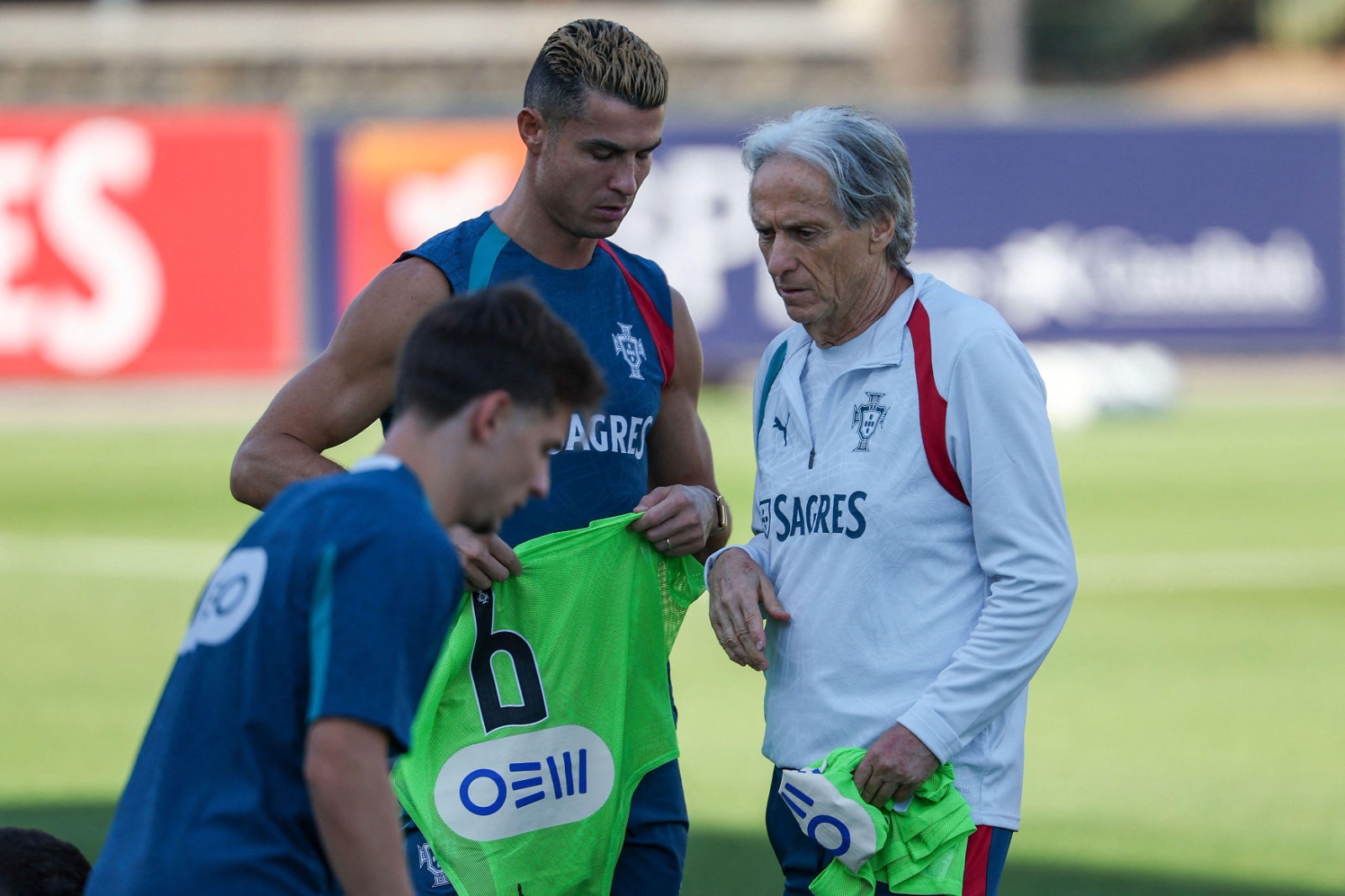

Cristiano Ronaldo’s departure from the Portugal camp has put his relationship with Jorge Jesus under scrutiny. Only months after celebrating a league title together at Al-Nassr, the pair are facing questions about the captain’s role and the manager’s authority.
Portugal have since beaten Denmark 4-2 without Ronaldo, with Gonçalo Ramos among the scorers. But the result does not resolve the wider question: how does a national team manage the final chapter of its greatest player’s career?
What happened against Norway?
The controversy began with Portugal’s 2-1 victory over Norway. Ronaldo remained on the bench throughout, despite warming up for a possible appearance. At 41, there is an obvious argument for managing his minutes, but the way the evening unfolded became the focus of attention.
According to Jesus, he had explained before kick-off that Ronaldo would not start, while leaving open the possibility of introducing him later. The manager ultimately decided against bringing him on. Portugal won, but the result quickly became secondary to the discussion surrounding their captain.
For most players, a match spent on the bench would attract little attention. Ronaldo occupies a different position within Portuguese football. He has spent more than two decades as the face of the national team, becoming its most-capped player and record goalscorer. His omission was always likely to carry greater significance.
Jesus acknowledged Ronaldo’s frustration but defended his right to select the team. Ahead of the Denmark fixture, he also denied that the forward had refused to train or that there had been a confrontation between them.
Ronaldo nevertheless left the camp. In a statement, he said the decision followed Jesus’ press conference and a conversation with Portuguese Football Federation president Pedro Proença, adding that he would explain his reasons later. Reporting on his departure leaves an important distinction: his exit is confirmed, but his full account of the disagreement remains outstanding.
Why their Al-Nassr history matters
The two men were not starting from scratch. Jesus had guided Al-Nassr to the Saudi Pro League title, with Ronaldo scoring 28 league goals. Their relationship appeared productive, and the manager had publicly praised the forward’s professionalism, ambition and desire to keep competing.
That history makes the present situation more striking. Jesus already understood Ronaldo’s personality and expectations, while Ronaldo knew the demands of his manager. They had shown that they could work together and win.
The difference with Portugal is not that Jesus suddenly has responsibility for a whole team. That was true at club level too. It is the weight of Ronaldo’s place in the country’s sporting history, alongside the need to prepare for a future without him.
At Al-Nassr, their partnership had delivered immediate success. With Portugal, decisions about Ronaldo also become decisions about succession. Reducing his role means changing the shape of a team that has relied on him for a generation.
Portugal’s next chapter
Gonçalo Ramos is central to that discussion. Jesus knows him from Benfica and had indicated that he would start against Denmark. The striker then scored in Portugal’s victory on 1 October, alongside João Cancelo, Vitinha and João Félix.
The 4-2 win in Copenhagen gives the debate a fresh context. Portugal were able to win and find goals without their captain. One result, however, does not establish that they are a better side without him or settle what his future role should be.
Ronaldo’s international career has been extraordinary. He helped Portugal win Euro 2016 and has accumulated more than 200 appearances. His record deserves recognition, but no international career lasts forever.
Portugal must balance that experience with opportunities for the players who will eventually take over. The transition is complicated because Ronaldo remains capable of influencing games. Preparing for life without him does not automatically mean there is no place for him now.
That is why this dispute is about more than whether he should have appeared against Norway. Can he accept a reduced role when the manager believes it is necessary? And can Jesus establish that role without creating avoidable friction?
From the manager’s perspective, selection must remain his decision. Ronaldo’s reputation cannot guarantee a place in the starting XI or an appearance from the bench.
Ronaldo may see the situation differently. Being told an appearance was possible, warming up and then remaining unused could have contributed to his frustration. But until he gives his full explanation, that remains an interpretation rather than an established account of his motives.
There has been speculation about whether his departure could mark the end of his international career. Leaving a camp, however, is not the same as announcing retirement, and the two should not be treated as interchangeable.
Jesus and Ronaldo have already proved that they can win together. The challenge now is whether they can agree on a role that serves Portugal as well as its captain. The country has to prepare for its next chapter, but how it handles the end of this one will matter too.
Leave a Reply